1. Collection and sourcing
Recycled material begins as a stream of used plastic, and the quality of that stream sets the ceiling for everything that follows. Post-industrial streams — factory offcuts, production scrap — tend to be cleaner and more predictable than post-consumer streams, which are more variable in polymer, colour and contamination.
2. Sorting and preparation
Sorting separates material by polymer type and removes things that should not be there: metal, paper, glass and non-target plastics. Separation may be done manually, by density in water, or with optical and near-infrared equipment. Good sorting is what keeps a PET line from carrying PE, and a PE line from carrying PET.
3. Crushing and size reduction
Sorted material is cut or crushed into regrind and flake. Smaller, more even pieces wash better, dry faster and feed more consistently into downstream equipment. Crushing does not remove contamination, but it makes it easier to remove in the next stages.
4. Washing and drying
Washing removes residual soil, labels, adhesives and product residue. PET is often hot-washed, using elevated temperature and a washing agent to remove oils and contamination more thoroughly. PE and PP streams typically go through their own wash line, with density steps separating them from any remaining heavier material.
Drying comes next. For PET this is especially important: the polymer absorbs moisture, and that moisture must be driven off before melting, or the material degrades during processing.
Worth knowing: every extra sorting and washing step adds quality, but also cost and yield loss. Where those trade-offs land is a commercial decision as much as a technical one.
5. Granulation
In granulation, cleaned flake is melted and forced through a die, then cut into pellets as it cools. Granules are more uniform than flake, flow better in feeding equipment, and are easier to blend. Melt filtration during extrusion removes remaining fine solid contamination.
Some applications are well served by flake rather than granules. Sheet, fibre and some moulding processes can run flake directly, avoiding the energy and cost of a melting step.
6. Quality checks and dispatch
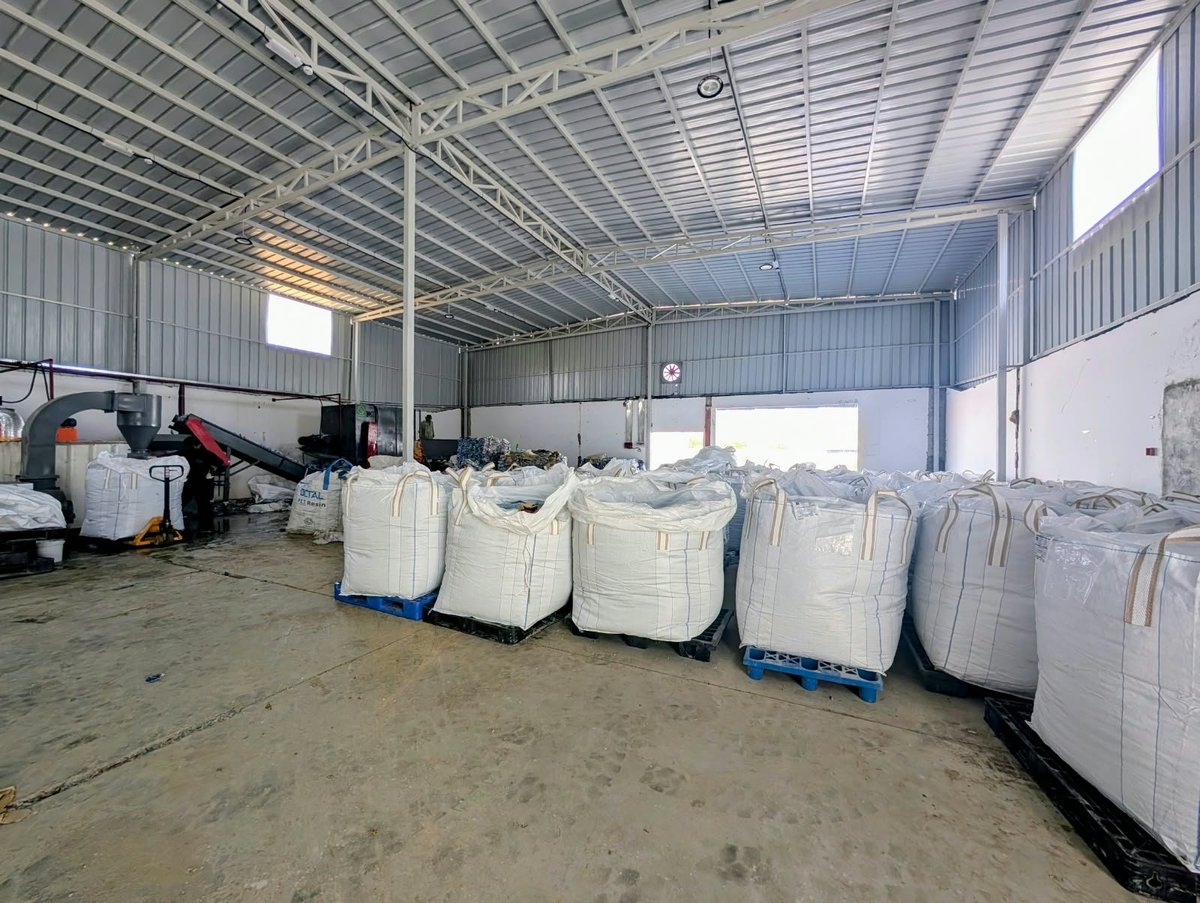
Before dispatch, material is checked against the agreed specification — appearance, contamination, moisture, and where applicable melt behaviour. Packaging matters too: the right bag protects the batch from moisture pick-up and keeps it identifiable through storage and transport.
Why the sequence matters
Each stage depends on the one before it. Poorly sorted material cannot be fully fixed by washing, and poorly dried material will struggle in granulation. Understanding the sequence helps buyers ask better questions — and helps suppliers explain exactly what a material grade is worth.