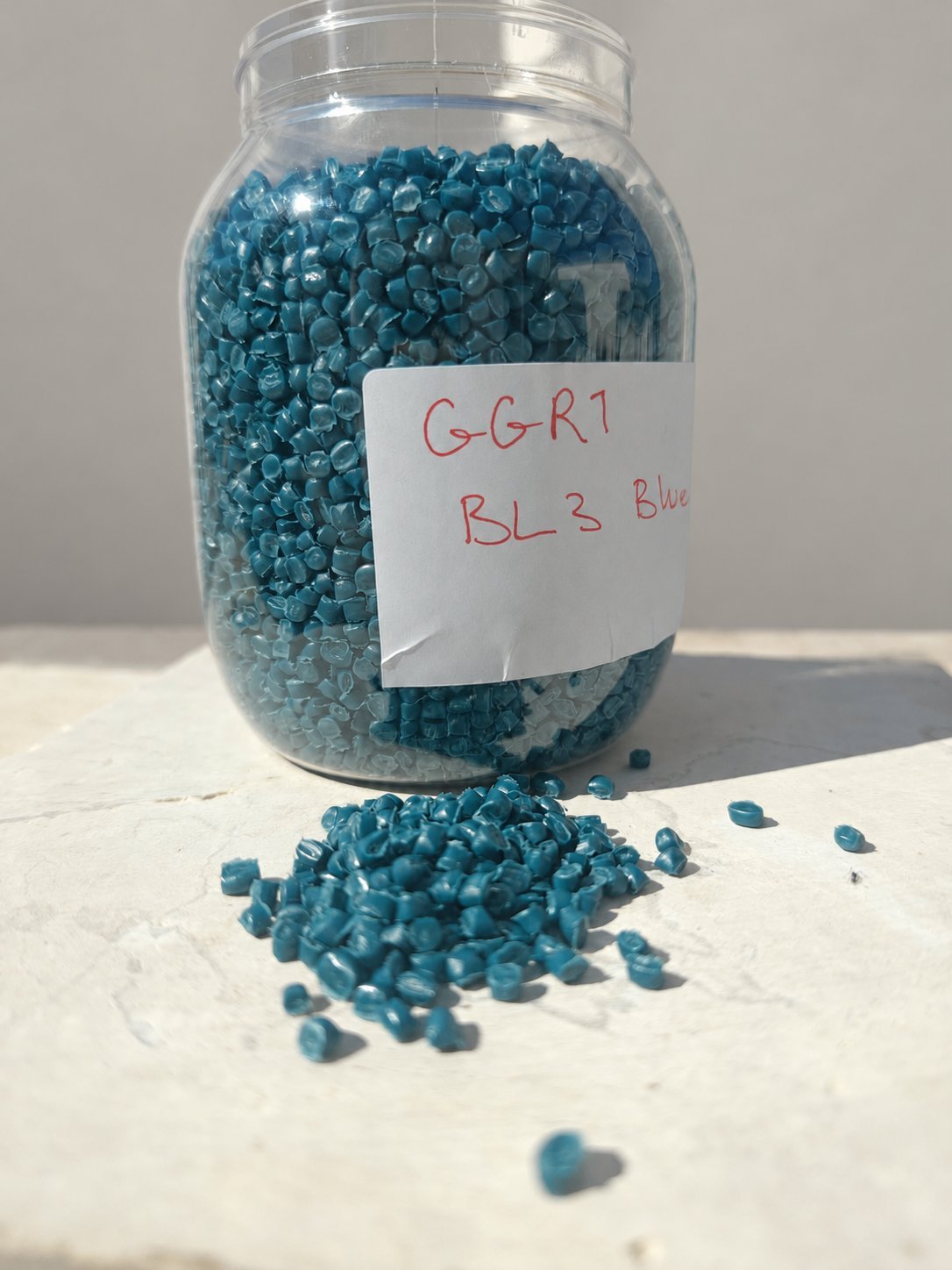
1. Polymer type and source
Start with the polymer itself — PET, HDPE, LDPE, LLDPE, PP — and the product stream it is recovered from. A bottle-grade PET stream and a general mixed PET stream are not interchangeable. Describing the source helps a supplier know which of their lines the enquiry belongs to.
Where material comes from more than one source, ask how suppliers combine streams and whether the resulting blend is consistent from batch to batch.
2. Form: flake, granule or regrind
Form determines how material handles in your feed system. Flake and regrind are irregular and can bridge or feed unevenly; granules flow more predictably. Your conveying, drying and dosing equipment may suit one form better than another, so state the form you can accept.
3. Melt flow and processing behaviour
Recycled material often shows a broader range of melt flow than virgin resin, because of mixed sources and repeated heat history. Specify the range your process can tolerate, and ask whether the supplier checks each batch or works to a historical typical value.
Tip: agree how values will be measured and reported. A figure is only useful if both sides mean the same test method.
4. Contamination and residual moisture
Contamination is the most common cause of processing problems — non-target polymers, metal, paper, adhesives and residual soil all matter. Moisture is critical for PET, which absorbs water and must be dried before extrusion. Ask what the material is washed to, how it is dried, and how it is packed to avoid re-absorption in transit.
5. Colour and appearance
Natural, mixed-colour and sorted-colour streams serve different end uses. If appearance matters for the finished part, specify the colour category and whether colour variation between batches is acceptable.
6. Packaging and quantity
Bale, octabin, big bag or sack — packaging affects handling, storage and moisture control. Specify the unit size and how the material will be labelled and documented on arrival.
7. Consistency over time
The question that matters most for a production line is not what one batch looks like, but how much variation to expect across deliveries. Ask how a supplier manages incoming streams, and whether they can hold to an agreed specification over a longer supply relationship.
A practical specification checklist
- Polymer type and source stream
- Material form and approximate particle/ flake size
- Melt flow range, and how it is measured
- Permitted contamination and moisture levels
- Colour category and appearance tolerance
- Packaging type, unit size and labelling
- Batch documentation and how claims are recorded
None of these points replace testing against your own process. They simply give both sides a shared starting point — which is usually the difference between a difficult trial and a workable supply relationship.